Showing posts with label Photographers. Show all posts

Fabrice Monteiro | Signares

Photo © Fabrice Monteiro-All Rights Reserved
I'm always interested in the intersection of fashion and travel photography. Exotic and beautiful women in exotic dress...what's not to like? One of my modules during my photo expedition to Vietnam will include a model shoot in Hoi An....and I really look forward to it.

In that vein, I feature the lovely fashion-travel-cultural work of Fabrice Monteiro, which showcases gorgeous women taking the roles of Signares. According to Wikipedia, Signares was the name for the French-African women of the island of Gorée in French Senegal during the 18th and 19th centuries.

These women held some power in a patriarchal system throughout the Atlantic Slave Trade, and over time amassed considerable power in trade and wealth. Some owned land as well as slaves. European merchants and traders, such as the Portuguese, settled on the African coastal societies inhabited by Signares and would marry them in order to benefit from their connections and wealth.

Fabrice Monteiro, living and working in Dakar, is a Belgian-Benin photographer who, while an industrial engineer by training, adopts the style of photo-reportage and fashion photography. He specializes in Africa, and being of a cultural mix himself, favors subject matters that provide the same mix.

The Travel Photographer's Street Photo Contest


The Travel Photographer's Street Photography Contest is open to any professional, student, or amateur photographer at least eighteen (18) years of age. The contest is restricted to residents of the contiguous United States.*

The contest's main theme is daily life in any city, town or village (anywhere in the world), captured through street photography: real, instant images, that grab moments, people, faces, streets, buildings and other elements capable of telling stories.

The sole prize is the handcrafted WotanCraft Ryker Urban Classic 001 which I reviewed earlier here. It's an ideal camera bag for street photography, it's low-profile and is made of very high quality leather.

The requirements and rules are simple: 

1. Entrants can submit up to three (3) photographs, color or monochrome.

2. Each photograph must be a jpg 1000x667 pixels at 72 dpi.

3. Each photograph must include your name and a sequential number if submitting more than one (ie JohnDoe_001.jpg, etc.)

5. Each photograph must indicate where it was made (New York City, San Francisco, London, Delhi, Tokyo, etc).

4. Entrants warrant that their submissions are all their original work.

5. The contest is closed for submissions on August 31, 2014.

6. Entrants are to send their submissions to: tes(at)telsawy.com. The email must also include entrants' full name.

7. There are no fees, or any costs to the entrants. This contest is essentially a competitive giveaway, and has received the blessing of WotanCraft Atelier. 

Judging:

I shall be judging the submissions, and will announce the three top best photographs. These three photographs will be posted on this blog, and public voting will be opened to choose the prize winner. This will occur during the week following August 31, 2014 deadline. 

* Regrettably, shipping to destinations other than in the contiguous United States is not only costly, but also involves an amount of paperwork, as well as potential hefty custom duties to be paid by the eventual recipient, especially with such an expensive camera bag. That is the reason for restricting the contest as I did. My apologies to the multitude of very talented non US-based photographers who may have been interested in entering the contest. 

WotanCraft Atelier's website has full information and details on the WotanCraft Ryker Urban Classic 001.

Photo Courtesy WotanCraft Atelier

Lalla Essaydi | Les Femmes Du Maroc

Image © Lalla Essaydi-All Rights Reserved
"There is some evidence that the Orientalist perspective has had an impact on the actual lives of Arab men and women, and especially that the rules for Arab women became much stricter as a result of Western influence." Lalla Essaydi
It's rare that I feature work that is more art and mixed-media than pure documentary photography, but the interesting fusion of women portraiture, Arabic calligraphy, and henna in Lalla Essaydi's images encouraged me to show her work on my blog.

Moroccan born, Ms. Essaydi sets up her models inspired by 19th century Orientalist paintings, and adds layers of hand-written Arabic calligraphy with henna to the walls and fabrics that her models wear, as well as to their exposed skin. Her decision to merge the calligraphy (traditionally a male-dominated art form) and henna (a feminine occupation, particularly to celebrate weddings and other joyous occasions) is to try to dissolve the restrictions and fluidity of Islamic traditions.

Lalla A. Essaydi currently lives in the United States, where she received her MFA from the School of the Museum of Fine Arts/TUFTS University. Her work has been exhibited in many major international locales, including Boston, Chicago, Minneapolis, Texas, Buffalo, Colorado, New York, Syria, Ireland, England, France, the Netherlands, Sharjah, U.A.E., and Japan and is represented in a number of collections, including the Williams College Museum of Art, The Art Institute of Chicago, the Fries Museum, the Netherlands, and The Kodak Museum of Art. 

According to her biography,  her paintings often appropriate Orientalist imagery from the Western painting tradition, thereby inviting viewers to reconsider the Orientalist mythology. She has worked in numerous media, including painting, video, film, installation, and analog photography.

Toufic Beyhum | Mecca

Photo © Toufic Beyhum-All Rights Reserved
"...though neither Koran or Sultan enjoin the death of Jew or Christian intruding within the columns that note the sanctuary limits, nothing could save a European detected by the populace, or one who after pilgrimage declared himself an unbeliever."-A Personal Narrative of a Pilgrimage to Al-Medinah and Meccah (1855)-Richard Francis Burton
Mecca...or more accurately Makkah, is the birthplace of the Prophet Muhammad and a site of his first revelation of the Qur'an. It is regarded as the holiest city in Islam, and a pilgrimage to it (the Haj) is obligatory for all Muslims physically and financially able to make the journey. Mecca is home to the Kaaba, Islam's holiest site as well as being the focal point of Muslim prayer.

Photographer Toufic Beyhum had the inside view to the holy site when he undertook his own pilgrimage. While photography inside the mosque enveloping the Kaaba is forbidden, he was able to enter the site with his camera, and photograph almost at will.

A rather journalistic article in The Daily Telegraph has more background information on his photo shoot, and it may come as a surprise to some of my readers that the inside of the holiest of Islam's religious sites is the only place in Saudi Arabia where sexes are allowed to mingle freely. Yes, women and men stand, walk, pray, circumambulate the Kaaba shoulder to shoulder...with none of this ridiculous strict segregation of sexes which is currently en vogue in Islamic countries.

I had the opportunity of visiting the Kaaba some years ago while on a business trip to Jeddah, and it left a deep impression on me as a place of piety and peace. At that time, the hideous newly built monstrosities surrounding the mosque hadn't been erected, and the Meccan skyline was still unmarred by the Mecca Royal Hotel Clock Tower, which is the tallest clock tower in the world.

According to the article, there’s a hotel nearby the mosque where rooms are $500 a night, along with a mall with a Starbucks and a Paris Hilton handbag shop.

Historically, it appears that in the 5th century, the Kaaba was a place of worship for the deities of Arabia's pagan tribes, and Mecca was an important trading destination of the caravans, carrying goods from Africa and the Far East passed through it including spices, leather, medicine, cloth, and so forth.

Toufic Beyhum was born in Beirut, and moved to London at a young age. He graduated from Art College and started a successful advertising career as an Art Director for multinational advertising agencies in New York, Dubai, London and Berlin. He exhibited his work in London, Berlin, Los Angeles and Dubai. He was featured in National Geographic Shot, The Independent, Esquire Russia, WIRED, BILD, Die Zeit, Der Tagesspiegel, Zeitung, Welt Am Sonntag, Complex art+design, Exberliner, Time Out Dubai, BMI and Emirates In-flight magazine.

Currently based in London, he's isworking on a film documentary called "After Tomorrow" filmed in Petra, Jordan.

POV: Moribund Google+ ?


A recent article in Slate about the future of Google+ caught my attention largely because it reflects pretty much what I feel about that social network, and about its photography community in particular.

I ought to have positive things to say about Google+ seeing that my profile received in excess of 436 million views so far. This is certainly a glitch, but seeing that number every time I log on to my profile is a tremendous ego boost.

But first things first...The New York Times pointed out recently that Google+ is useful to Google as an identity service by which the company can better track users across services like YouTube, Gmail and Google Maps. In other words, it's data mining like so many other social networks (Facebook for example).

Late last year, I joined a number of Google+ photography forums/communities, and posted whatever I write on my blog and on Facebook. To be honest, I never felt connected. It just didn't feel comfortable. Yes, photographs look much better on Google+ that any other social network, but it left me cold.

I suspect it's because 99% of my network of 'friends' on Facebook consists of photographers I either know personally and of others who know them...a sort of two degrees of separation. For instance, the number of friends' requests I receive on Facebook jumps just before, during and after the annual Foundry Photojournalism Workshop....so there are real human connections behind many, if not all, of these.

Not so for Google+.

Moreover, I'm really not a community/forum kind of guy... and expecting comments on photographs I post, saying that how "delightful the expression is", how "extraordinary is the light that dissects the scene" or if the photograph is better in color or monochrome...etc is not a turn on for me. Naturally, if I get a compliment, I respond with my sincere thanks....but I'm not ready to expend so much time to read, respond and reciprocate the commentary.

Perhaps it's because I'm not really that interested in such feedback from people (despite the fact some are very talented photographers) in that particular type of social interface/forum. Face to face feedback (or from someone I already met and know) is different, because it's verbalized and is done in person, and there's much more to gain and offer.

I know others exult about Google+ as being the bees' knees for photographers, but to me, the value of joining the photographic communities is not worth the required time expenditure.

I'll remain as I am on Google+, and will retain my activity level at what it is...but not more than that. And if and when it really dies or withers...I won't care.

Terri Gold | In The Mist of Time | Omo Valley

Photo © Terri Gold-All Rights Reserved
Terri Gold is an award-winning photographer and artist based in New York City, and has built an impressive reputation for her infrared imagery of rituals, rites of passage, festivals, celebrations and portraits from all over the world.

Her artistic creativity and energy were patently obvious during my Tribes of South Rajasthan & Kutch Photo~Expedition™which she had joined in January 2010, as she moved from one photo shoot in a village to the next photographing with her two cameras; one "normal" like those used by the rest of us, and the second professionally modified to shoot infrared.

She has recently returned from the endangered Omo Valley with new work...both infrared imagery and standard, and uploaded her best work using the former technique on the gallery she titled In The Midst of Time: Omo Valley. The images are really distinctive, and more fine art than travel documentary photographs as such, with the majority being set up for an aesthetic impact...or fine art imagery, if you prefer.

The Omo Valley of Ethiopia is home to eight different tribes numbering around 200,000 people in total, and their traditional way of life and culture are threatened by the Ethiopian government introducing and planning large infrastructure projects to the area, and while these will provide better medical and educational facilities, trading and many associated benefits to the tribes, there are also governmental programs aimed at forcibly resettling them.

Some conscientious travel companies have recently ceased to bring loads of tourists to the Omo Valley in an effort to pressure the Ethiopian government to cease these resettling programs. Perhaps that will also slow down the exploitation of these tribes by some tourists who view them as beautiful displays.

Terri Gold's work has been described as "interpretive in nature and incorporates the use of infrared light and the invisible light spectrum." I'm not sure how Terri photographs these days, but at one point of time she would wear up to four cameras around her neck; a digital camera, a digital camera converted to infrared, a XPan with cross-processed film (or B&W), and a Mamiya 7.

Sara O'Brien Callow | The Yangon Loop

Photo © Sara O'Brien Callow-All Rights Reserved

One of my regrets while photographing in Myanmar (twice!) some 10 years ago was missing the Yangon Circular Railway. It's a local commuter rail network that extends for about 30 miles with 39 stations. It has about 200 coaches, runs 20 times and sells 100,000 to 150,000 tickets daily. It takes some three hours to complete, and is a great way to see a cross section of life in Yangon.

The cost of a ticket is the equivalent of $0.09 for the Burmese, and $1.00 for foreigners, regardless of the length of the journey

Like Sara's above photograph and the rest of her photo essay The Yangon Loop, it provides photographers a wonderful opportunity to visually capture the people of Yangon....chatting, sleeping, selling vegetables and tea...etc.

A Foundry Photojournalism Workshop alum, Sara O'Brien Callow started out her photography career in 2011 when working at an Elephant Park in Northern Thailand. It wasn't long before she dedicated herself to documentary photography. Currently based in Melbourne, she has numerous projects in development as well as focusing on the completion of her tertiary studies. 

Also take a look at Sara's Project Grey, which she began during her time at the Elephant Park in 2011 and has been developed further in 2013 with plans to continue in early 2015. It's probably the project closest to her heart.

Sara has taken part in numerous workshops under the guidance of; Andrea Bruce, James Whitlow Delano, Les Walking, Maggie Steber, Alex Webb and Rebecca Norris Webb.

Devansh Jhaveri | Maatam

Photo © Devansh Jhaveri-All Rights Reserved

I'm glad to showcase more work by Devansh Jhaveri on this blog, and I chose his gallery titled Maatam-A Mourning which features monochromatic photographs of a religious ritual performed by Shi'a Muslims.

I'm uncertain as to where these photographs were taken, although I suspect they could have been during the Maatam ritual in Hyderabad, the capital of the southern Indian state of Andhra Pradesh, and where hundreds of thousands of Shia Muslims live.

The ritual takes place on the day of Ashura; the tenth day of Muharram in the Islamic calendar, and is commemorated by Shi'a Muslims as a day of mourning for the martyrdom of Hussein ibn Ali, the grandson of the Prophet Muhammad at the battle of Karbala.

Despite various religious proclamations by Shi'a clerics forbidding the ritualistic practices of self flagellation, and cutting the body with razors or knives, some men still perform Maatam by slashing themselves with chains known as zanjeer or swords and allow their blood to run freely.

Devansh Jhaveri is no stranger to The Travel Photographer's blog, having won the coveted title of The Travel Photographer blog's Travel Photographer of 2012. He has many more photographic styles to be very proud of. He also specializes in weddings, fashion, documentary, dance, and portraiture.

Jeremy Snell | Portraits Of A Sadhu


The staff at Vimeo picked Jeremy Snell's Portraits of a Sadhu, and it garnered over 7,000 views at the time of my writing this post.

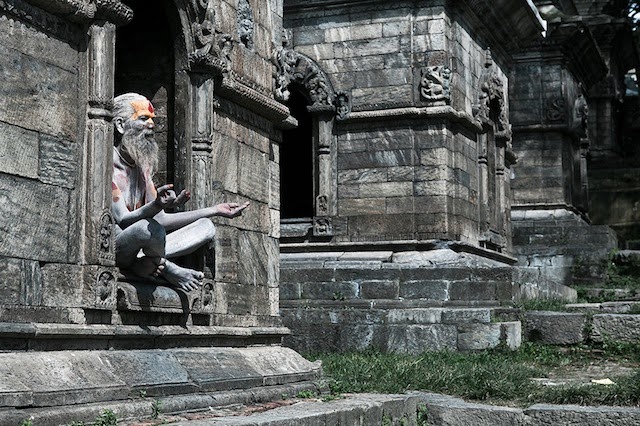
The (almost) 3 minutes video introduces us to Rada Baba, a sadhu currently living at the Pashupatinath Temple in Kathmandu. It's the oldest Hindu temple in Kathmandu, and is about 3 miles from Nepal's capital city. Sadhus, such as those shown in Jeremy's video, are common at this temple, especially as it's considered as one of the subcontinent’s four most important Shaiva pilgrimage sites.

It's said that some of these sadhus who are present at Pashupatinath, are members of the Gorakhnath cult, who follow a tantric path, practicing to free themselves of sensual passions and go beyond the attractions of the physical world.

Like Shiva, sadhus use of intoxicants as a so-called path to "spiritual insight". Shiva supposedly discovered the merits of ganja (cannabis), which grows wild in Nepal. They consume the weed in the form of bhang (a liquid preparation) or hashish smoked in a vertical clay pipe known as a chilum.

In a recent post POV: Sadhus, Charlatans or Not, I wrote that I thought most sadhus were a cross between homeless charlatans and spiritual ascetics....but the more difficult question to answer is whether they became ascetics because of poverty or because of some form of inherent spirituality. Charlatanism is an integral part of many of them, but they may have resorted to this activity because of need.

This issue was discussed at some length on my Facebook page. Whether you side with the more plausible view that there are many more fake sadhus than real ascetics, or not, you'll enjoy this short documentary video. I've seen and photographed these sadhus, and I know first hand that they know how to be photogenic. I recall sitting in Durbar Square in Kathmandu, watching two rather flamboyant sadhus, milking tourists who wanted to take their picture. When the light was gone, they hailed a rickshaw...and went home.

Jeremy Snell is a commercial & fine art, portraiture photographer/filmmaker based in Honolulu(Hawaii).

Rohit Vohra | Stolen Moments

Photo © Rohit Vohra-All Rights Reserved

I do like the phrase 'stolen moments' when it relates to street photography, since I agree that candid photography is a form of 'theft'...after all, it was Henri Cartier-Bresson who chose the phrase of images à la sauvette, which may be translated as "images on the fly" or "stolen images, as a title for one of his books. The phrase was then translated to the more widely known "the decisive moment"by the English publisher of the same book.

And where else other than India can it be most practiced? Actually, in a lot of more places, but India occupies a significant place in the pantheon of interesting countries to photograph in the streets. As I often say, it takes considerable courage to photograph in black & white in India...avoiding the seduction of color that attracts so many of us. That is precisely what Rohit Vohra did in his Stolen Moments galleries...stolen moments in the streets of India in monochrome.

Just have a look at the decisive moment in the above photograph. Possibly made in the chaotic alleys of Old Delhi, a woman gestures with her hand trying to gain passage in front of a harried rickshaw driver, while her child and the driver glare at each other. One could write a short story based on this split second moment.

Rohit Vohra is a street photographer based in New Delhi whose photographs are often about contact with humans and basic living elements. He is also a co-founder of APF Magazine.

Dario Mitidieri | Calabria's Holy Blood

Photo © Dario Mitidieri-All Rights Reserved

In villages of the region of Calabria (southern Italy), the Rito dei Vattienti (or Rite of the Beaters) is an annual religious event dating back to 1473. It's during the event that devout Catholics flagellate themselves during a procession, carrying a statue of the Virgin Mary.

The flagellation is a manifestation of extreme religiosity, and is performed as means of cleansing one's soul. The tool used to draw blood is called "cardo"; a paddle made of cork is embedded with shards of glass, and is used to by the Vattienti's to beat their thighs and legs during the procession, while another piece of cork is used to cleanse the wounds. The flowing blood is then washed off to the streets with red wine.

Dario Mitidieri is an Italian photographer, currently based in London where he studied photojournalism and works as freelance. 


His major photographic assignments include: the plight of the Kampuchean refugees in Thailand; the Tiananmen Square massacre; German reunification; the cyclone in Bangladesh; the fall of the communist regime in Albania; the destruction of the Ayodhya Mosque in India and the subsequent communal violence in Bombay; Ayrton Senna’s last race; the refugee crisis in Rwanda; the Kobe earthquake in Japan; "children at war" in former Yugoslavia, Ethiopia, Rwanda and Angola; Charismatic Evangelism in the USA, England, India and Korea; the last Masaai in Kenya; the fall of Baghdad and the mass graves of Iraq; the aftermath on the Tsunami in Indonesia.


In 1992 he spent the whole year in Bombay documenting the lives of street children, and produced his book Children of Bombay (1994) which was translated into six languages.

His photograph of a young girl street acrobat in Bombay (from the above mentioned book) was featured as the cover for the magnificent novel A Fine Balance by Rohinton Mistry which is set between 1975 and 1984 during the turmoil of The Emergency, a period of expanded government power and crackdowns on civil liberties in India.


Alexis Pazoumian | Sadhu Hundred

©Alexis Pazoumian-All Rights Reserved


Sadhus...depending on your point of view or experience, they can be spiritual ascetics, devout mystics, philosophic vagabonds, or homeless charlatans. I can say that many of the sadhus I've encountered (and I have met a lot during my countless travels in India) are a bit of all these descriptions, but most are charlatans, preying on the generosity, spirituality and superstition of lay people...many of whom are equally poor. That said, they are photogenic and they know it.

It is estimated there are 4 to 5 million sadhus in India, and these belong to two main sects: the Shaiva sadhus, who are ascetics devoted to Shiva, and Vaishnava sadhus, who are renouncers devoted to Vishnu (including Rama and Krishna). Although some sub sects have properties that generate revenue to sustain members, most sadhus rely on donations, and poverty and hunger are realities for many sadhus.

Alexis Pazoumian's Sadhu Hundred is a photo gallery of sadhu portraits; some of which were photographed at the Pashupatinath Temple located on the banks of the Bagmati River in Kathmandu. It's one of the most significant Hindu temples of Shiva in the world.

You'll note the sadhus following Shiva wear a tilak of three horizontal lines across the forehead, while the tilak of Vaishnava sadhus usually include two or more vertical lines resembling the letter U, which symbolizes Vishnu's foot.

Alexis Pazoumaian is a photographer in France who, after completing a two-year course in a graphics school, turned to photography. He spent six months documenting and living in one of Rio de Janeiro’s favelas,  and was finalist in a contest by “Paris Match” for photojournalism students.

His clients include Agence Elan, Premicefilms, Elie Saab, Maje, Hilldale production, Toshiba, Caviar Agency, We love Art, Monsieur White, Société Général, Maison Sauvage, Grand Palais, Groupe Vendôme, and Agence moderne. 

Mustafa Dedeoğlu | Istanbul

Photo © Mustafa Dedeoğlu-All Rights Reserved

In 1807, Napoleon would exclaim "Constantinople, Constantinople! C'est I'empire du monde!"

When I started photography in earnest some 12 years ago,  my first solo destination was Istanbul. I was attracted to its traditional architecture, its people, its food, its culture and above all its history. After all, my country of birth was part of the Ottoman Empire and there are many similarities between them.

Since that first trip, I went back twice...and the latest was during the 2010 Foundry Photojournalism Workshop where I taught a class on Multimedia. It was like seeing an old friend after a few years of absence. I ate hamsi (whenever I could find them), sardines, kunefe, then drank Efes, rode the ferry and the tram, and dropped by the Grand Bazaar. I could go on and on....

With the memories of Istanbul in mind, I feature the photographic work of Mustafa Dedeoğlu, who photographed his wonderful city, mostly in monochrome.

I also liked Mustafa's work on Anatolia, with many strong portraits, also in monochrome.

Mustafa started taking photos a few years ago ago, and is largely self-taught.  He uses the Nikons d700 and d800 cameras, and prefers wide angle lenses such as the Nikon 14-24 mm. He also used Nix Software's Silver Efex for black and white conversions. In common with many street photographers, Henri Cartier-Bresson is his insipiration.

Constantine Manos | Leica & Magnum


Here's a Leica Camera documentary on Constantine ("Costa") Manos, the Magnum photographer known for his photographs of Boston and Greece.

Let me share a story about Costa Manos.

In 2000, I joined a street photography workshop in Old Havana with Costa Manos as instructor. It was one of the foreign destination workshops by the Maine Photographic Workshops, and probably the only workshop I ever attended. It was just after the Elian Gonzales custodial battle, which made authorized travel to the island more difficult than usual...but the workshop went ahead, and a small group of hard-core photographers made it (somewhat circuitously because of our US passports) to Havana.

It was still pre-digital world at the time, and for Costa to edit our photographs, we had to use color film and have it processed at local photo processing stores. Naturally, the quality left much to be desired, but the processing was fast and cheap. I had just returned from Nepal and India, and was quite full of myself...and super proud of the portraits of sadhus and Nepali women that I displayed to the group and for Costa's critique.

He took his time looking at my photographs, and probably seeing I was getting a little anxious, he told me something I have never forgotten:

"Your pictures are technically fine, but they're too simple...I want you to bring me complicated pictures; pictures that tell stories; pictures that I can look at for a long time..."

If there's only one piece of advice that guided my photographs since 2000, it was this. And it was then I began trying to complicate my photographs, to complicate my compositions. and to try to insert and build layers upon layers in them. Sometimes I succeed...and sometimes I fail. Most of the time, it falls somewhere in the middle....but I never forgot Costa's advice.

Photo © Constantine Manos-All Rights Reserved
The above photograph is hanging in my office, and I bought it from Costa during the Havana workshop.

Heidi Laughton | Spirit Hawk Eye

Photo © Heidi Laughton-All Rights Reserved

Just a few days after returning to New York from Los Angeles, I got an email from Heidi Laughton announcing the opening of her "Spirit Hawk Eye" exhibition at the Talisman gallery...in Los Angeles! I had originally met Heidi a few years ago in London where we attended a travel photography show in Earl's Court.

So it's with pleasure that I feature Heidi's Ways of the World photographic galleries, which include images from her “Spirit Hawk Eye: A Tribute to American Native Culture” photographs. These celebrate American Indian culture andreveal aspects of present-day cultural practices and lifestyles, remarkable individual stories and colorful, spiritual and artistic elements of Native American communities.

For this particular series of photographs, Heidi embedded herself within the Native American culture, and photographed a "mix of modern and traditional regalia, with the traditional regalia not necessarily being a true representation of the wearer’s tribe, but often an amalgamation of different tribal influences as is often the case today".

Originally from London, Heidi is now a Los Angeles-based fine art, portrait photographer who always had a fascination for world cultures and has worked on projects that took her as far as Kenya and China.

The photographs now exhibited at the Talisman Gallery were made usingmedium and large format film and are available as archival pigment prints on fine art paper. Alongside each portrait, a text panel further explains facets of Native life and anecdotal information relating to the portrait.

I missed it by a few days, but my readers who are in Los Angeles can view the exhibition at Talisman Fine Art Gallery, Bergamot Arts Center, Unit A6, 2535 Michigan Avenue in Santa Monica.

Nevada Wier | Insights


"...all of us should have art in our lives...."
There is a small number of leading household names in the world of travel photography and visual ethnography, and one of the top world-wide recognized names is that of Nevada Wier.

As many of my readers know well, Nevada Wier is a multiple award-winning photographer specializing in documenting the remote corners and cultures of the world. She has been published in numerous national and international publications, such as the National Geographic, Geo, National Geographic Adventure, Islands, Outdoor Photographer, Outside, and Smithsonian. She is a Fellow of The Explorer’s Club and a member of the Women’s Geographic Society.

She also is a speaker for workshops, seminars, professional panels, and conferences, and has been featured in video promotions for Adobe Lightroom.

This an interesting insight in Ms Wier's craft and thought process that's behind it. She's currently involved in personal projects, and you'll see towards the end of the video that's she's keen on working with infrared imaging. Well worth your time to appreciate the vision of an experienced and wise professional travel photographer

The video can also be viewed on Vimeo.

Jimmy Nelson | Before They Pass Away

Photo © Jimmy Nelson-All Rights Reserved


I've traveled quite a lot and visited far flung places, read and viewed many travelogues and photo essays...but I've never heard of Goroka.

But having viewed Jimmy Nelson's phenomenal opus Before They Pass Away, I now know what it is, and so will you.

British photographer Jimmy Nelson carried his 4x5 plate field camera to 44 countries around the globe; from the rain forests of Papua New Guinea to northern Mongolia to the Namibian desert, to document a tribal cultures that may disappear before we know it.

According to the photographer's website,  "the goal of this visual anthropology, published in Nelson's new book, Before They Pass Away, was to capture the lives of remote and endangered tribes. The tribes he captures might seem wild and somehow alien, but they show clear dominion over their remote and unforgiving environments, offering a remarkable glimpse back in time to how we urban dwellers once lived."

About 30 tribal groups are documented in Nelson's website and book...ranging from the Kazak of Mongolia to the Karo of the Omo Valley, lovers of ethno-photography and aficionados of anthropology will revel in exploring this work.

The book has over 500 images to be featured in large book, printed in a huge 42 x 59 cm size. The price of this special exclusive collectors' book is around $8000. However, a more modest version exists and will be available for $95 in September 2013 from Amazon.

In the meantime, I'll be frequently enjoying Nelson's tribal photographs, and I encourage you to do so as well.

Mario Testino | Alta Moda

Photo © Mario Testino-All Rights Reserved
I had little knowledge of who was Mario Testino, apart from knowing his name from the photo credits in fashion magazines (The New York Times T Magazine, which is really the only fashion publication I look at), but I was amazed at his latest photographic work which is titled Alta Moda.

Let me backtrack for a moment. Yes, I do peruse T Magazine to look at the fashion adverts, and perhaps get influenced by the fashion photographers' aesthetic, how they set up their shoots, and the postures and poses adopted by the models, the color schemes and the lighting. It would be an exaggeration to say that this kind of photography inspires me, but it certainly leaves a visual and subconscious residue which I reach for when I'm photographing in India, Bhutan or Bali, etc.

Now back to Mr Testino. Alta Moda is his most recent exhibition at his cultural institute in Lima, Peru. It comprises series of photographic portraits of Peruvians in traditional and festive dress from Cuzco, one of the highest regions of Peru. It's been described a change in pace for the famous photographer, and it seems he spent a considerable amount of time and effort in setting up each image. Alta Moda will be exhibited in New York in the fall of 2013.

Mario Testino is a Peruvian fashion photographer. His work has been featured in magazines such as Vogue and Vanity Fair. He's one of the world's most well known and celebrated fashion photographers, and his photographs have been featured in magazines such as Vogue, Vanity Fair and V, and he has crafted and contributed to the imagery of leading fashion houses such as Burberry, Gucci, Versace, Calvin Klein, Dolce & Gabbana, Salvatore Ferragamo, Estee Lauder and Michael Kors, among others.